


The Lost Skills of Independence — 200 Life-Saving Skills They Never Taught You for Food, Survival, Home Security, and Complete Self-Reliance
🛡️ 200 practical skills across food preservation, herbal remedies, survival, home security, and self-sufficiency — with step-by-step instructions and full-color illustrations for every single one
🔧 Built like a reference manual — spiral bound, hardcover, thick pages — so it stays open while your hands are busy and lasts a lifetime
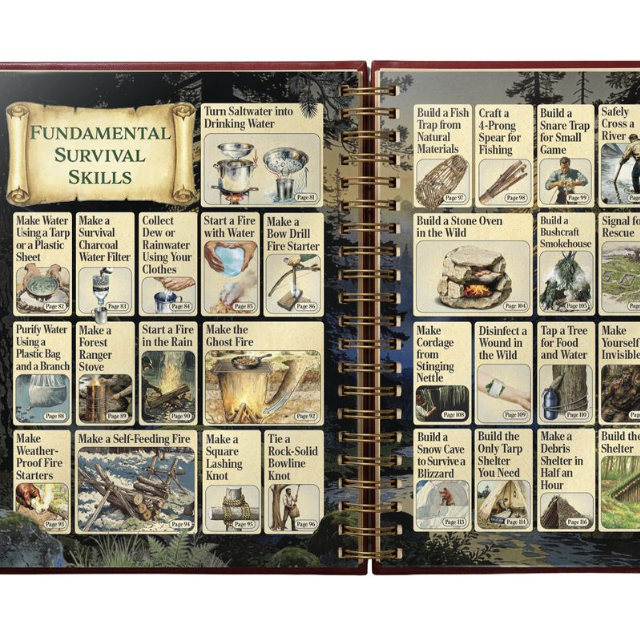
📖 Organized by 200 illustrated skill cards so you can find exactly what you need instantly — no wading through chapters to find the one thing you're looking for
Grab your set while it's in stock.
Couldn't load pickup availability

The Lost Skills of Independence



200 Skills They Stopped Teaching Generations Ago
There was a time when knowing how to preserve food for a year, purify water from any source, treat a wound without a pharmacy, and secure a home without a security company were just things people knew.
That knowledge didn't disappear because it became useless. It disappeared because a dependent population is easier to manage than a self-reliant one.
This book puts it back in your hands.

Built to Be Used — Not Just Read
Most books sit on a shelf. This one was designed to be opened in the middle of a project with your hands full.
The spiral binding keeps it flat. The hardcover holds up to years of use.
The thick pages don't tear when they get wet or worn.
And the 200 illustrated skill cards at the front mean you can find exactly what you need in thirty seconds without flipping through chapters.
The Reference Manual Your Family Will Use for the Rest of Their Lives
This isn't a book you read once and put down. It's a reference you reach for when the power goes out, when the store shelves are empty, when a wound needs treating and help isn't coming fast enough.
Every skill has a complete ingredient or tool list so you know what you need before you start.
Every illustration guides you through the process step by step.
One book. A lifetime of use.
Testimonials
Frequently Asked Questions
Do I need any prior survival or homesteading experience to use this?
Do I need any prior survival or homesteading experience to use this?
None at all. Every skill is explained from the beginning with step-by-step instructions and full-color illustrations.
The book was built for everyday people — not military veterans or homesteaders.
If you can follow a recipe, you can follow this book.
What exactly does the book cover?
What exactly does the book cover?
Eight major categories — Self-Sufficient Home Projects, Lost Kitchen Secrets, Fundamental Survival Skills, Lost Healing Remedies, Independent Living Skills, Self-Sustaining Garden, Life-Saving Skills, and Forbidden Psychology.
Each category contains multiple skills with full instructions and illustrations.
Is this a physical book or digital?
Is this a physical book or digital?
Fully physical. Hardcover, spiral bound, 262 pages of thick durable paper.
It works with no power, no Wi-Fi, no device.
That's intentional — the skills inside are exactly the ones you'll need when everything digital stops working.
How is this organized — can I find specific skills quickly?
How is this organized — can I find specific skills quickly?
Yes. Instead of a standard table of contents, the book opens with 200 illustrated skill cards each showing the skill name and page number.
You find what you need visually in seconds without reading through chapters.
What's your return policy?
What's your return policy?
Free returns within 30 days of delivery for a full refund — no questions asked.